
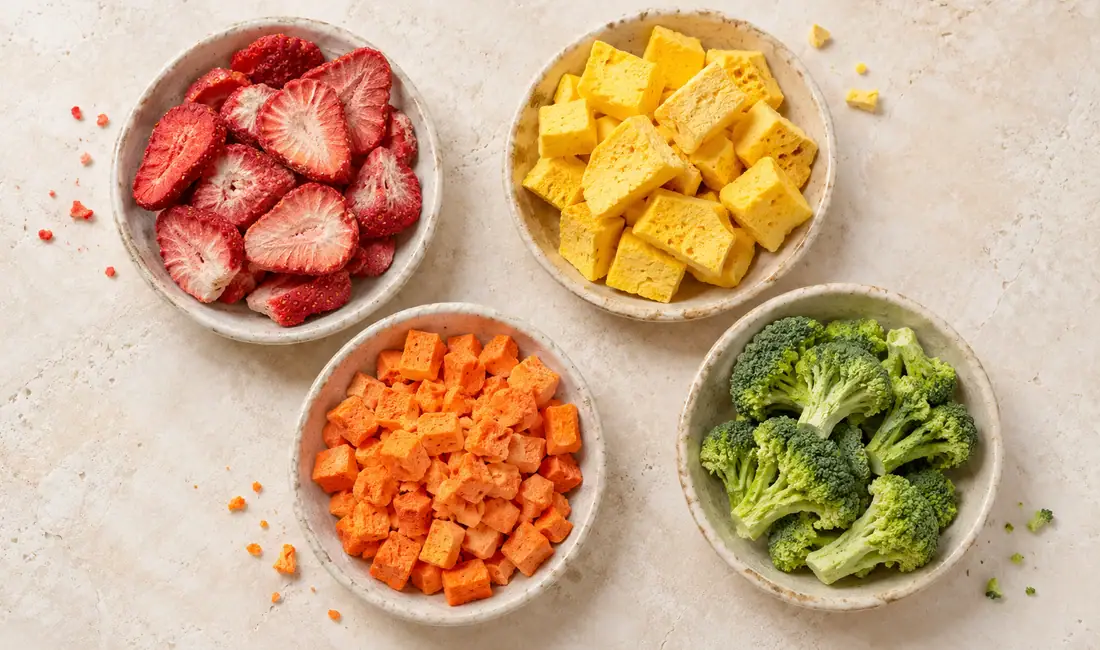
Freeze-dried food is generally a healthy choice since the low-temperature vacuum process preserves most of the protein, minerals, fiber, and many vitamins from the original ingredients. Water gets pulled out by sublimation, which is just a fancy way of saying ice skips the liquid stage and turns straight into vapor. This gentle approach skips the high heat used in lots of other preservation methods.
Nutrition does vary by nutrient. Protein, minerals, and dietary fiber hold up well. Vitamin C and some antioxidants are more sensitive—they react to heat and oxygen, even after processing.
This article dives into how freeze-drying works, which nutrients make it through, where freeze-dried foods fall short, and how they stack up against dehydration, canning, freezing, and fresh produce.
Freeze-dried food has had its water removed at low temperature under vacuum, so the ice turns straight into vapor. The final product depends on how the water is removed, how the drying stages are managed, and how quickly the food was frozen at the start.
Freeze-drying (or lyophilization, if you want to sound fancy) removes moisture through sublimation. That just means ice changes directly into vapor, skipping the liquid phase.
Food contains two types of moisture. Free water freezes and comes out first; bound water is locked inside the food and doesn’t freeze the same way.
Pulling this water out drops the food’s water activity—the amount of moisture available for microbes to use.
Lower water activity keeps bacteria, yeasts, and molds at bay. So, taking out water slows down the microorganisms that spoil food.
The freeze drying process runs in three stages: freezing, primary drying, and secondary drying. Primary drying removes the frozen free water by sublimation.
Secondary drying (or desorption drying) takes out the bound water left in the food’s structure. Both stages use low temperature and vacuum, which protects heat-sensitive nutrients.
How well secondary drying is finished determines how much moisture is left in the product. That leftover moisture sets the upper limit for shelf life.
If you leave more moisture, the shelf life drops—even if everything else is perfect.
Freezing is probably the most critical step because it locks in the food’s internal structure before any water is removed.
Fast freezing creates tiny ice crystals. Slow freezing makes big crystals that can wreck cell walls from the inside.
It’s a chain reaction:
Slow-frozen products often rehydrate into softer pieces that leak more liquid. Rapid freezing helps food hold its shape better.
This is why two products labeled freeze-dried aren’t always equal. The label tells you the preservation method, not the freezing conditions behind it.
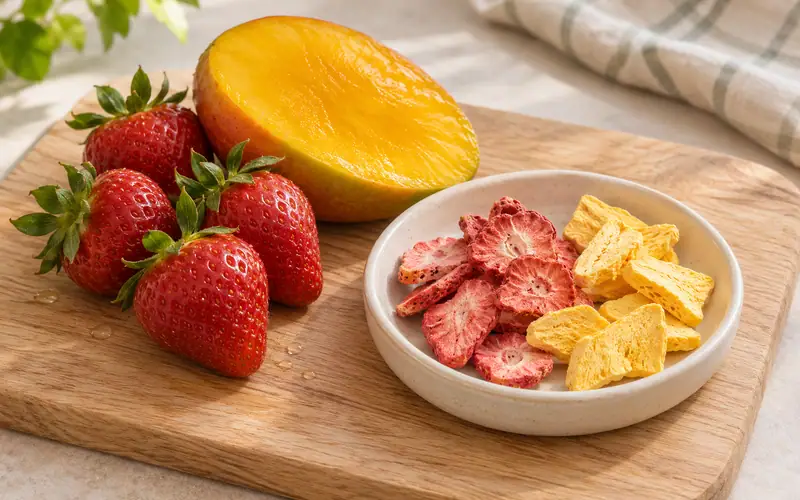
Freeze-drying preserves most nutrients because it removes water at low temperature under vacuum, skipping the high heat that can break them down. Still, retention varies depending on the nutrient, drying time, and how tests are set up.
Protein and minerals stick around best—they aren’t damaged by low-temperature processing. B vitamins and fat-soluble vitamins A and E also survive well. Dietary fiber stays pretty much untouched, since its structure doesn’t depend on heat. Polyphenols and other antioxidants do better than in hot-air drying, but results depend on the specific food. The main reason? The process stays cold, so nutrients that usually break down under heat are mostly preserved.
Vitamin C is the big exception—it’s sensitive to both heat and oxygen. If secondary drying drags on, the product spends more time exposed to oxygen. The porous structure from sublimation also increases the surface area for oxygen to react with. So, drying time and surface area both affect how much vitamin C you lose. Even so, freeze-drying still beats hot-air drying, where high temperatures really take a toll.
Published retention numbers often skip important details, making them tough to compare. Three questions matter:
Without those details, a retention number only describes one specific test—not all freeze-dried food.
Freeze-dried food keeps nutrients well, stores easily, and weighs less, but it also packs more calories by weight, has some food safety quirks, and costs more to make. Here’s a quick look at the main upsides, practical drawbacks, and how cost and packaging come into play.
Most benefits of freeze-dried food come from one thing: low-temperature vacuum sublimation, where ice turns straight into vapor without melting.
Because heat stays low, nutrition, flavor, and color remain close to fresh. Removing water drops water activity enough for room-temperature storage, so you don’t need preservatives.
Taking out water makes food lighter and smaller, so it’s easier to ship and store. The porous structure left behind means it rehydrates quickly when you add liquid.
These perks fit some uses perfectly:
Freeze-drying isn’t perfect, and each limitation has a practical fix.
Taking out water concentrates calories by weight, so a small serving packs more energy than fresh produce. Watching portion sizes by weight helps keep things predictable.
The crisp texture and strong flavor make these foods easy to eat fast, which can lead to bigger portions. Single-serve packs can help curb that.
Freeze-drying doesn’t kill pathogens. Raw meat and eggs survive the process, so you need to cook them before eating, and labels have to make that clear.
Allergens aren’t removed either. Any allergy-causing ingredients stick around and must be listed on the label.
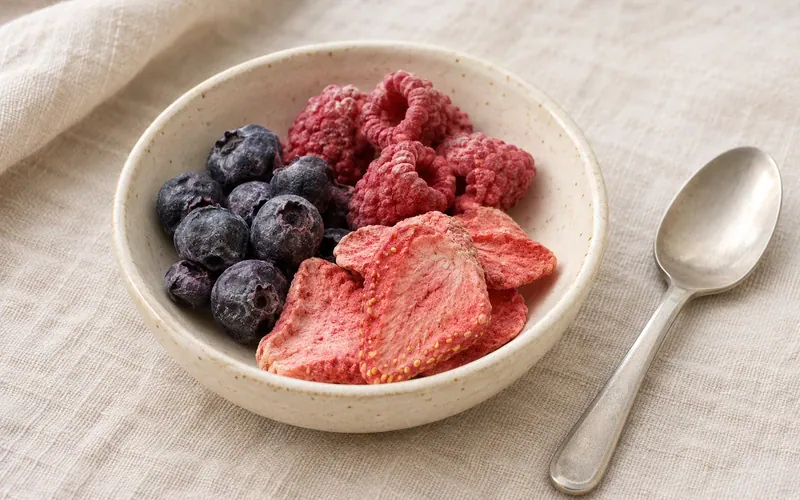
Freeze-drying uses vacuum equipment and long drying cycles, so energy and equipment costs push the price higher than hot-air drying.
That upfront cost often pays off with a longer shelf life and less spoilage during storage and shipping.
Packaging is critical. Barrier packaging that blocks moisture and oxygen is a must for the promised shelf life. If the packaging doesn’t match, shelf life drops—no matter how good the drying was.
Not every food is a good fit, either. High-fat and high-sugar foods don’t freeze-dry well, since fat doesn’t sublimate and sugar resists drying.
Each preservation method handles moisture differently, and that affects nutrient retention, shelf life, and texture. Here’s a look at how freeze-drying compares with dehydration, canning, freezing, and fresh food, focusing on process temperature, vitamin and antioxidant retention, additives, and rehydration.
Freeze-drying pulls out moisture using low-temperature vacuum sublimation—ice goes straight to vapor. Dehydration uses hot air to evaporate water, so food sits in heat for hours.
Canning sterilizes food at high temperature in sealed containers, which kills microbes but also brings the most heat stress. Freezing keeps food cold and the water inside, just holding it as ice.
Fresh produce gets no preservation at all. Its moisture and structure stay untouched.
These five methods mainly differ in how they handle water and how much heat the food gets. That’s what really sets them apart.
| Dimension | Freeze-Dried | Dehydrated | Canned | Frozen | Fresh |
| Processing temperature | Low, under vacuum | High (hot air) | High (sterilization) | Low | None |
| Moisture removal / water state | Water removed by sublimation | Water removed by evaporation | Water stays in container | Water kept as ice | Water fully retained |
| Vitamin retention | High | Moderate | Lower | High | Highest at harvest |
| Antioxidant retention | Better than hot-air drying, varies | Reduced by heat | Reduced by heat | Well retained | Well retained |
| Dietary fiber | Essentially unaffected | Essentially unaffected | Essentially unaffected | Essentially unaffected | Unaffected |
| Need for additives | Not needed for shelf stability | Varies | Varies | Not required | Not applicable |
| Ambient shelf life | Long, if packaged right | Moderate | Long | None; needs cold chain | Very short |
| Texture and rehydration | Porous, rehydrates fast | Denser, slower to rehydrate | Softened by heat | Close to fresh after thawing | Original texture |
Two factors matter most: shelf life at room temperature (freeze-dried and canned foods win here), and how well heat-sensitive nutrients survive (low-temperature methods keep more than high-heat ones).
Fresh produce packs the most nutrients right at harvest, but those nutrients drop during storage and transport. Freeze-dried foods keep their nutrition, flavor, and color at room temperature—no preservatives needed. That’s a big plus for long supply chains, prepped meals, snacks, and fruit and veggie smoothies.
Freezing keeps quality close to fresh, but you need constant cold storage. Canning is cheaper and shelf-stable, though you lose more heat-sensitive vitamins.
The best choice? It really depends on your needs. If you don’t have a cold chain and need a long shelf life at room temp, freeze-dried is the way to go—as long as the packaging actually protects the food.
Freeze-dried food can keep its nutrition for years, but only if you control moisture, oxygen, light, and temperature. If any of these slips, quality drops way before the “best by” date.
That “up to 25 years” shelf life? It only applies if storage conditions are ideal—not every freeze-dried product will last that long.
Here’s what really matters:
Food composition plays a role too. Plain fruits, veggies, and grains last longest.
Foods with more fat or sugar don’t keep as well—fats go rancid, sugars pull in moisture.
Freeze-dried foods are full of tiny holes left by ice, which makes them rehydrate quickly but also exposes a lot of surface to air.
Oxygen is the main culprit for loss. It breaks down vitamin C, polyphenols, and fats, leading to faded color, stale taste, or rancid notes in fatty products.
Moisture is next. If the seal breaks or you store it in a humid room, water sneaks back in, raising water activity until mold or bacteria can start growing again.
Physical issues count, too. Tiny holes, weak seals, used-up oxygen absorbers, or crushed food that packs tight—all of these can shorten shelf life, no matter what the package says.

Quality varies a lot in freeze-dried foods. Buyers should use a methodical approach. Nutritional goals, label details, and supplier quality controls all offer clues about what you’re really getting.
Start with your purpose. A hiking meal, a snack, and a smoothie base all need different nutrition. Set your targets—calories, protein, sodium, added sugar—before you compare. Freeze-dried foods are calorie-dense by weight, since removing water concentrates everything else. So, portion size matters more than package weight. If you’re looking for fruit or veggie servings, focus on fiber and micronutrients, not just calories.
The ingredient list tells you if it’s a single freeze-dried food or a blend. Short lists with just the raw ingredient mean less processing. Longer lists might add sugar, oils, salt, or flavorings that change the nutrition. Labels should also say if there’s raw meat or egg—freeze-drying doesn’t kill pathogens, so those need cooking. Allergen info is still important; freeze-drying won’t remove those proteins.
On the label, look for:
Process matters. Freezing rate makes a difference—fast freezing forms tiny crystals that protect cell walls, while slow freezing creates big crystals that break down texture and cause more liquid loss when you rehydrate.
Ask suppliers for data on residual moisture and water activity. If secondary drying is incomplete, leftover water cuts shelf life. Water activity measures the free water microbes can use.
It’s smart to request microbiological test results, allergen control procedures, and food safety certificates—these give you proof, not just promises.
Freeze-dried food gets frozen, then dried in a vacuum so the ice skips the liquid stage and becomes vapor. There are three steps: freezing, primary drying, and secondary drying (which removes water still trapped inside the food).
Protein, minerals, and fiber stick around the best. B vitamins and fat-soluble vitamins A and E also do pretty well, since there’s no high heat. Vitamin C is trickier—it reacts to heat and oxygen, and the porous structure exposes it to air.
Low-temp vacuum drying keeps nutrition, flavor, and color, plus you get shelf-stable products without preservatives. The porous texture also means fast rehydration, which is handy for meals, snacks, and smoothie bases.
Removing water means more calories by weight, so a small portion of freeze-dried fruit has more energy than the same weight of fresh. Watch your portions—the crisp texture and strong flavor make it easy to overeat.
Check the ingredient list for added sugar, oil, or coatings. Make sure any raw meat or egg has been cooked—freeze-drying doesn’t kill germs. Barrier packaging is essential for shelf life, so the packaging spec should match what’s claimed on the label.
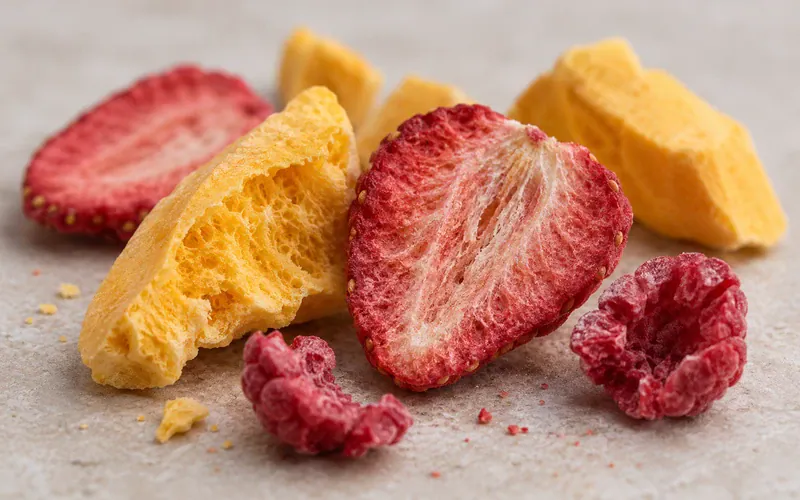
Freeze-dried food stands up pretty well as a nutritious choice. Thanks to the low-temperature vacuum process, protein, minerals, dietary fiber, and most vitamins stick close to what you’d get in fresh food. Flavors and colors mostly hang in there, too.
Are there downsides? Sure. But they’re usually manageable.
Compared to hot-air drying, canning, or freezing, freeze-drying usually gives you the best mix of long shelf life and decent protection for heat-sensitive nutrients. Of course, that perk comes with a higher price tag, mostly because the equipment and energy costs aren’t cheap.
For a lot of buyers, though, the longer shelf life and less waste can make up for the extra cost in the long run.
But let’s be honest—product quality isn’t the same across the board. Things like how fast something is frozen, how completely it’s dried, and what packaging is used all impact the end result. Two products both labeled “freeze-dried” can perform pretty differently.
If you’re sizing up suppliers, it’s smart to dig into details about their process control and how much moisture is left in the product, rather than just trusting broad claims about nutrient retention. Numbers only really mean something when you know what food was tested, when, and how those figures were calculated.