
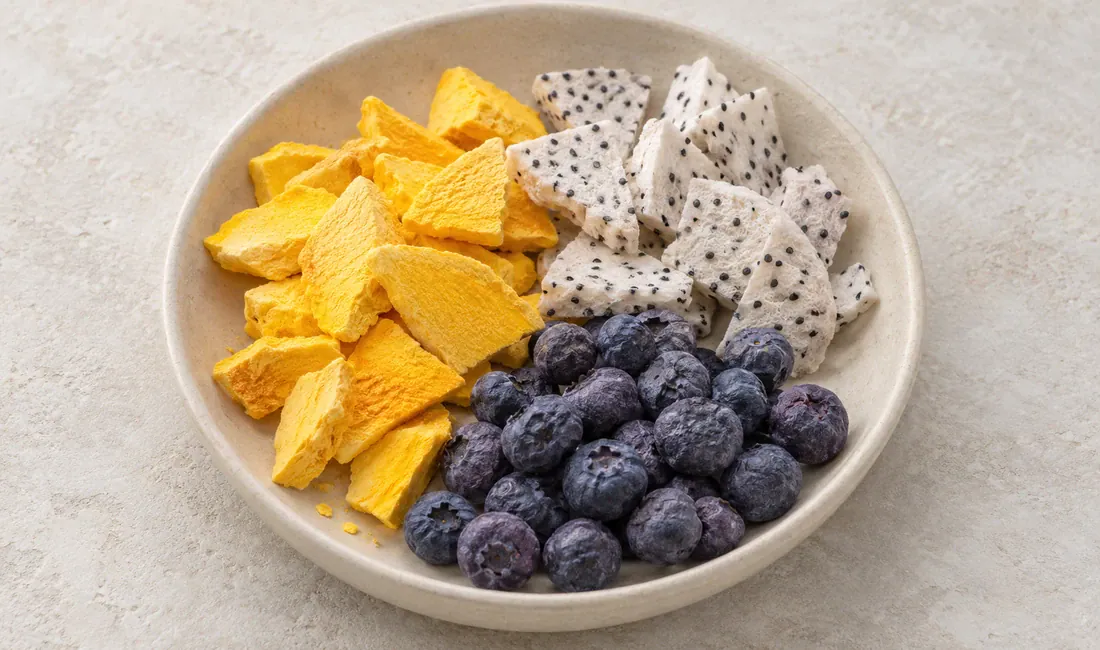
A piece of dried mango may bend and feel chewy, while a freeze-dried strawberry often breaks with a light crunch. Both began as fresh fruit, yet they offer different eating experiences. The difference becomes just as clear when they are added to cereal, a snack bar, or a cake.
Freeze-dried vs dehydrated fruit mainly comes down to how water is removed. The drying method affects texture, flavor, storage needs, and cost. This guide explains those differences and shows how each format can fit a snack, recipe, or food product.
Freeze-dried fruit is fruit that has been frozen and then dried under vacuum. Most of its water is removed while much of its original shape remains. The finished pieces are usually light, porous, and crisp.
Dehydrated fruit is fruit dried by removing water through evaporation. In this guide, the term refers mainly to common hot-air-dried fruit. These products are often smaller, denser, and chewier, though some thin slices can be dried until crisp.
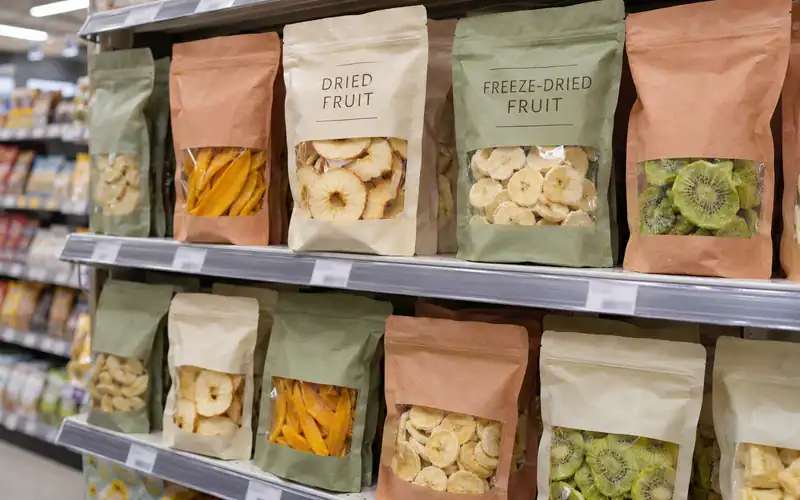
“Dried fruit” is a broad term that can cover several drying methods, including freeze-drying. Product names alone may not explain how the fruit was made.
The main differences are easier to see side by side. These are common patterns; fruit variety, piece size, and process settings can change the result.
| Feature | Freeze-Dried Fruit | Dehydrated Fruit |
| Main process | Freezing, followed by drying under vacuum | Water evaporation, usually with warm air |
| Texture | Usually light, crisp, and fragile | Often dense and chewy; some products are crisp |
| Shape and color | Often keeps more of its original shape and color | Usually shrinks; color may darken |
| Nutrients | Can retain heat-sensitive nutrients well | Retention depends on heat exposure and drying time |
| Rehydration | Porous pieces often take up water readily | Often slower, with more lasting chew |
| Storage | Needs strong protection from moisture | Also needs suitable packaging and dry storage |
| Cost | Usually higher | Usually lower |
| Common uses | Crisp snacks, cereal, toppings, and powders | Chewy snacks, bars, and baked goods |
Both methods remove water to help preserve fruit. The key difference is how that water leaves and what happens to the fruit’s structure along the way.
The fruit is prepared and frozen before drying. Under vacuum, ice changes directly into water vapor without first melting. This change is called sublimation. A final drying stage removes more of the remaining moisture.
Freeze-drying uses controlled heat to support drying. The product stays frozen during the main ice-removal stage, so the process differs from drying fresh fruit with warm air.
The spaces left by ice help create a porous structure. This gives many freeze-dried fruits their light weight and crisp bite.
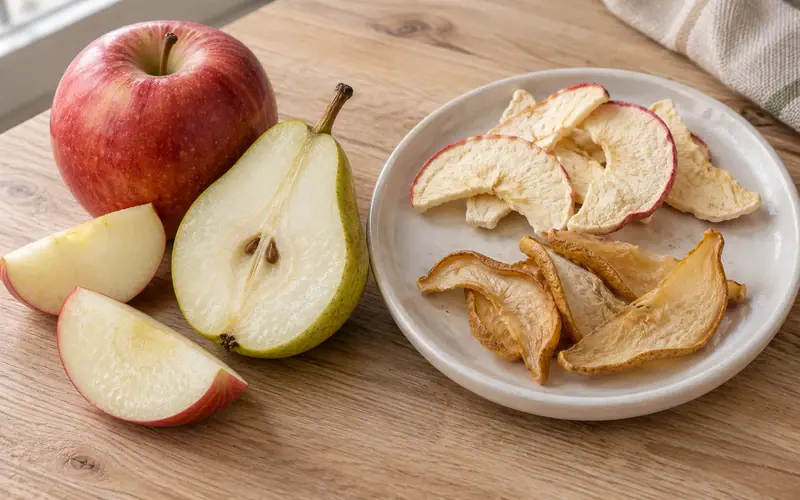
During hot-air drying, warm air moves over prepared fruit. Water moves toward the surface and evaporates. As the fruit loses water, its soft structure often shrinks and becomes more compact.
Drying temperature, time, airflow, and slice thickness all affect the finished product. This is why a chewy apple ring and a crisp apple chip can both be made through dehydration.
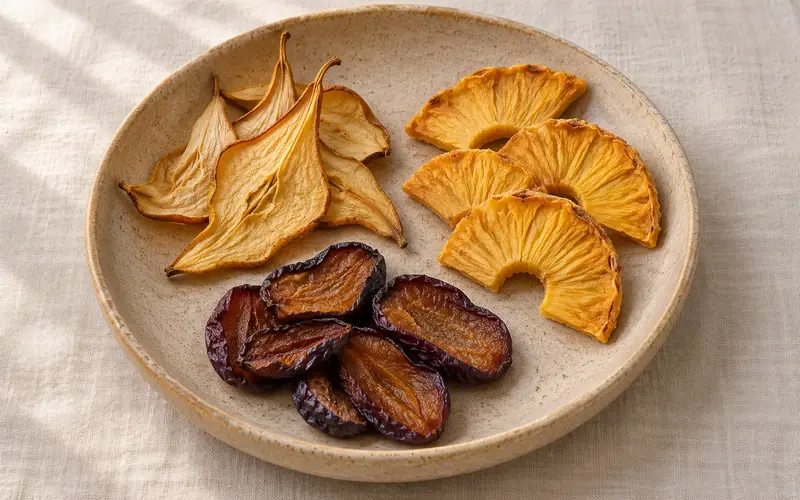
Texture is often the first difference a person notices. Freeze-dried fruit tends to break easily and soften as it absorbs moisture. Dehydrated fruit often bends and requires more chewing. Neither texture is right for every product.
For example, freeze-dried strawberries can provide a crisp bite in a dry cereal mix. Chewy dried fruit can give a snack bar a different texture. The choice depends on the eating experience the product needs.
Freeze-drying often keeps a brighter color and a flavor closer to the starting fruit. Heat drying can change aroma, color, and sweetness perception. Variety, ripeness, and any pretreatment also matter.
The same porous structure that creates crunch can make freeze-dried pieces fragile. Suppliers and buyers should consider broken pieces and fine particles when choosing a cut size and packaging format.
Both formats can provide fiber, minerals, and other fruit nutrients. Freeze-drying can help retain some heat-sensitive nutrients, but a fair comparison also needs to consider the ingredient list and serving size.
Vitamin C and some other fruit compounds can be affected by heat, oxygen, and processing time. Freeze-drying can retain more of these compounds than hot-air drying. For example, a study of three mulberry varieties found better retention of vitamin C and several plant compounds after freeze-drying under the tested conditions.
That finding does not establish one retention rate for all fruits. Fruit variety, preparation, drying settings, and storage all affect the final nutrient levels.
Finished-product test results give food brands a clearer basis for comparing nutrients. The drying method alone cannot show how much of each nutrient remains.
Removing water makes the fruit’s natural sugars more concentrated by weight than in fresh fruit. It does not create extra sugar. Both drying methods can produce fruit with no added sugar.
Some products contain added sweeteners, oils, preservatives, or coatings. These depend on the recipe and processing choices. The ingredient list helps identify added sweeteners. Total sugar also includes sugar naturally present in the fruit, so both the ingredients and nutrition label matter.
For a useful comparison, check equal weights as well as the stated serving sizes. Equal-sized handfuls may weigh very different amounts because freeze-dried pieces are less dense.
Both can have a much longer shelf life than fresh fruit. Freeze-drying often produces very low residual moisture, which can support extended storage when the product is properly packed. However, there is no single shelf life that applies to every fruit or package.
Two measures matter. Moisture content describes how much water is present. Water activity describes how available that water is for microbial growth and other changes. The measures are related, but they are not interchangeable.
Packaging must help protect the fruit from moisture and other causes of quality loss. Storage temperature, light exposure, seal quality, and the fruit itself also affect how long the product keeps.
Opening the pack changes those conditions. Freeze-dried fruit can absorb moisture from the air and lose its crunch. Dehydrated fruit also needs protection from moisture. Resealing promptly and storing the product in a cool, dry place helps protect quality. The label or supplier’s instructions should guide use after opening.
For commercial purchasing, the stated shelf life should match the exact product, packaging, and storage conditions being supplied.
Freeze-drying requires freezing equipment, a vacuum system, a cold condenser, and careful process control. Its drying cycle is often longer than hot-air drying. Equipment, energy, and production time all contribute to the cost.
Fruit quality, cut size, sorting needs, and packaging also affect the quotation. A whole-piece snack may have different requirements from a product intended for milling into powder.
Buyers should compare equivalent specifications. Two prices per kilogram may reflect different moisture levels, ingredients, or proportions of intact pieces.
Freight needs a separate check. Freeze-dried fruit is light, but it can occupy more space and need protection against crushing. Lower product weight does not always mean a lower delivered cost.
The useful starting point is the finished product. Its target texture, moisture level, packaging, and price will help determine which fruit format fits.
Freeze-dried fruit suits products that need a light crunch and visible fruit pieces. Common uses include fruit snack packs, cereal mixes, and dry dessert toppings.
Contact with yogurt, milk, or other moist foods changes that texture. Adding pieces shortly before serving can help preserve their crunch. In a packaged product, moisture can move from other ingredients into the fruit, so the full recipe needs testing.
Freeze-dried fruit can also be milled into powder for flavor and color. This can be useful where a recipe needs fruit flavor with little added liquid.
Dehydrated fruit often fits products that need a firmer chew, such as fruit mixes, certain snack bars, and cookies. Its denser structure can also make it less prone to crumbling during handling.
Both formats can work in baking, but they behave differently. Freeze-dried fruit may absorb liquid and soften or break apart. Dehydrated fruit can retain a chewy bite. Replacing one with the other may require changes to liquid levels, piece size, or mixing steps.
A sourcing brief should define the fruit’s job in the product. Buyers comparing freeze-dried fruits with dehydrated alternatives should check:
Samples should be tested through the intended mixing, filling, and packing steps. This helps show whether the fruit keeps the required appearance and texture under real production conditions.
Equipment and recipe choices can raise further questions about how these products are made and used.
A standard food dehydrator removes water by evaporation. It does not provide the freezing and vacuum conditions needed for freeze-drying. Drying fruit until it is crisp does not make it freeze-dried.
It can work in some recipes, but the swap needs testing. The two products differ in moisture, density, and water absorption. A direct replacement by volume or weight may change the texture and moisture balance of the bake.
Many freeze-dried fruit snacks can be eaten straight from the pack. Rehydration is useful when a recipe needs softer fruit. The time and amount of liquid depend on the fruit and cut size. Rehydrated fruit may not fully regain the texture of fresh fruit.
For manufacturers and buyers, the right choice comes from matching the fruit to the product. Freeze-dried fruit often fits a light, crisp format, while dehydrated fruit often suits a denser chew. The final decision should account for taste, recipe performance, packaging, and cost.
Freeze-dried fruit is often a good fit for light, crisp snacks and dry toppings. Dehydrated fruit often works well where a denser chew and lower cost are priorities. The right choice depends on the finished product’s texture, flavor, storage needs, and budget.
For food brands developing a freeze-dried fruit product, a clear brief makes sourcing easier. Buyers can contact FNH Food to discuss fruit types, cut sizes, and packaging needs. Sharing the intended use and target order volume gives the team a useful starting point.