
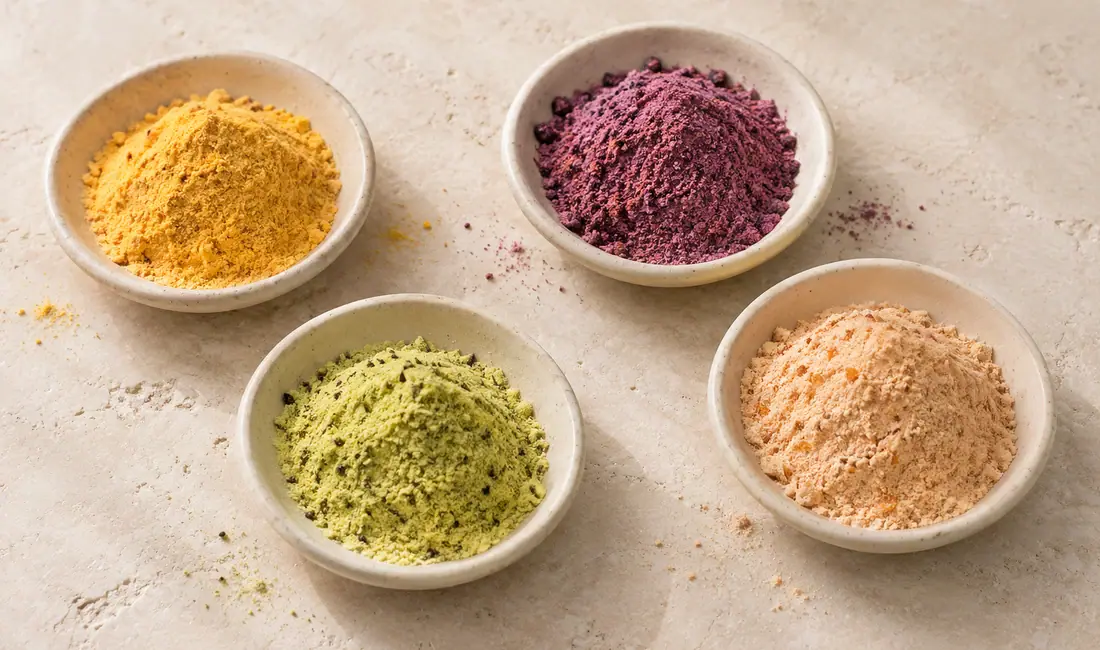
The fruit flavor in a pink frosting, a mango shake or a coated cereal bite does not always come from fresh fruit. Freeze-dried fruit powder gives food makers another way to work fruit into recipes, with much less water to manage.
The same powder behaves differently in a cake, a drink and a snack coating. Understanding those differences helps bakeries, food brands and manufacturers get better results. This article covers the main uses, practical mixing tips, and the checks that matter when choosing and storing an ingredient.
Freeze-dried fruit powder is made by grinding freeze-dried fruit into small particles. During freeze-drying, frozen fruit is placed under vacuum. Most of its water is removed as ice changes directly into vapor. The dried material is then milled to the required size.
Compared with fruit pieces, powder spreads fruit solids more evenly through a mixture. It supplies flavor and color while adding little water. This makes it useful in dry mixes, frostings and other foods where extra liquid would need careful control.
Its exact composition depends on the fruit and how it is processed. Whole-fruit powder contains fruit solids, including fiber, while some commercial products also contain carriers or other added ingredients.
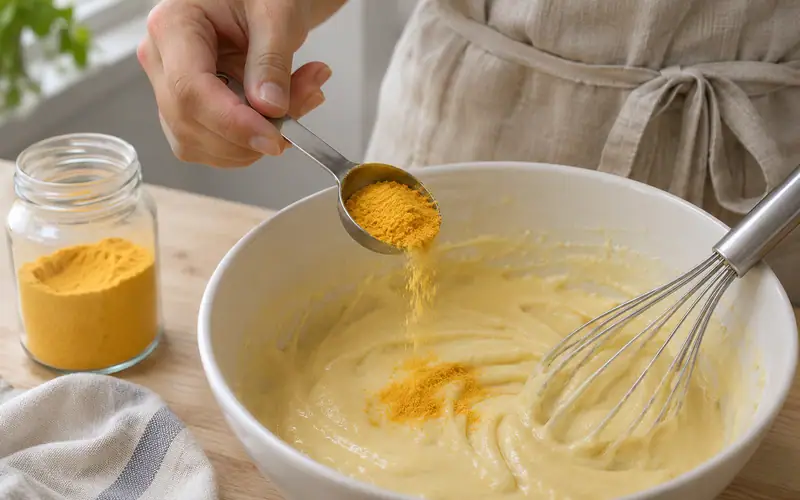
In baking, fruit powder works in the dough or batter, in a filling, or as a finish. Choosing where to add it helps control how the fruit flavor comes through.
Fruit powder adds flavor throughout a cake or cookie, rather than in separate pieces. Strawberry powder suits vanilla cake, while apple powder pairs with cinnamon in cookies or muffins.
Mixing the powder with the dry ingredients first helps spread it evenly. However, it adds solids and can change how the mixture holds water. The trial batch should be checked for thickness, spread and finished texture before the recipe is scaled up.
Fruit powder brings fruit flavor to frosting with much less water than juice or purée. Strawberry or raspberry powder, for example, adds a tart note that balances a sweet buttercream.
A fine powder suits smooth finishes. Sifting removes lumps, though it may not remove every small seed or fiber particle. Add it in stages, mix well, and assess the texture after it has had time to absorb moisture.
Fruit powder can flavor cream fillings or be blended with powdered sugar for dusting. A blueberry glaze on a lemon pastry or a strawberry sugar coating on a doughnut gives the fruit a clear role in the finished product.
For cooked fillings, test the addition point as well as the amount. Adding powder before heating may give a different flavor, color and thickness from adding it later.
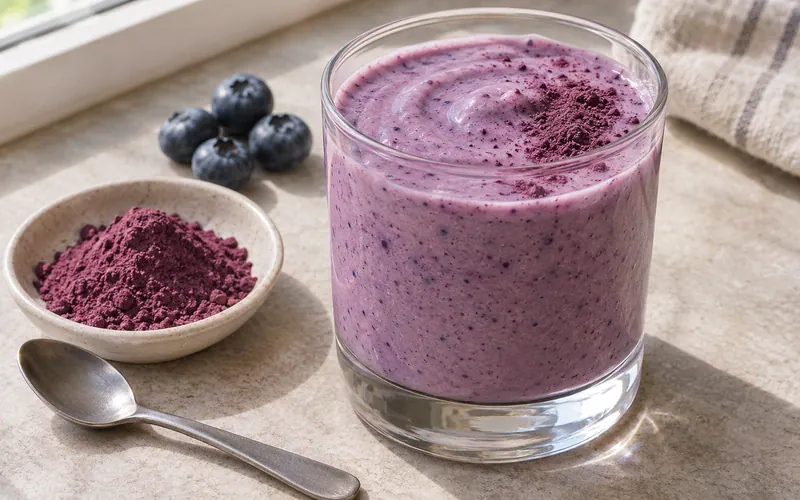
Fruit powder works in blended drinks and dry beverage mixes. The main challenge is getting an even texture, especially when the finished drink is thin.
Smoothies and milkshakes are useful starting points because blending helps spread the powder through the liquid. Mango powder can be tested in a yogurt smoothie, while strawberry powder suits a milkshake base.
Allow for the powder’s effect on thickness and tartness. A recipe may need changes to its liquid or sweetener level after the fruit is added. Taste the drink at its intended serving temperature.
In a light fruit drink, small particles are easier to notice. Whole-fruit powders contain fiber and other solids, so some may remain suspended or settle after mixing. Complete dissolution should not be assumed.
For recipe trials, blend the powder with a small portion of still liquid before adding the rest. Check the drink both immediately and after standing. A cloudy berry lemonade may suit the product concept, while a clear drink needs a different ingredient specification.
Fruit powders can be blended with dry ingredients for drink sachets or smoothie mixes. Here, the powder needs to mix evenly during production and perform well when the customer adds liquid.
Test it using the method stated on the pack. A mix intended for stirring in cold water should be assessed that way; a blender-only trial cannot establish how it performs with a spoon.
For snacks, fruit powder can flavor the base, blend into a binding mixture, or form part of a surface coating. Each route creates a different eating experience.
Fruit powder blends into yogurt, frozen yogurt and ice cream bases. Strawberry yogurt bark and mango frozen yogurt are two possible product ideas.
It also adds solids that may change thickness and freezing behavior. Research on freeze-dried strawberry powder in dairy desserts found changes in viscosity, hardness and melting. Developers should therefore assess the full texture, rather than judging the recipe by fruit flavor alone.
Fruit powder can be mixed into the binder used for oat bars, nut-based bites and granola clusters. For example, apple powder could be tested in a cinnamon oat bar, or strawberry powder in a coconut snack bite.
Check how the product holds together after mixing and during storage. The powder supplies fruit flavor, but visible fruit pieces may still be needed when the design calls for distinct bites of fruit.
A dry fruit powder can be used in chocolate work or as a dusting on coated snacks. Examples include berry-dusted truffles, fruit-flavored white chocolate and cereal bites with a fruit powder coating.
Fine particles matter when a smooth finish is required. In chocolate trials, assess flow and mouthfeel. For dusted snacks, check whether the powder stays on the surface through packing and handling, or collects at the bottom of the bag.
Reliable results come from measured trials in the actual recipe. Three habits make those trials easier to compare.
Use a scale to record the addition level. A spoonful can vary with powder density, particle size and how tightly it is packed.
For example, a trial containing 10 g of powder in 1,000 g of total mix has a 1% addition rate. The suitable level still depends on the fruit and recipe. Compare measured amounts while keeping the other ingredients and processing steps consistent.
The mixing method should match the food. Powder can be preblended with flour or sugar for dry recipes, added gradually to frosting, or dispersed in part of the liquid for a drink.
Water used to make a slurry must be counted in the recipe. For melted chocolate, keep the powder dry and follow the chocolate process; the liquid premixing method used for drinks does not transfer to this application.
Judge the powder after the full process, including baking, cooling or freezing. Heat and acidity can affect fruit pigments, so the color of a raw mixture may differ from the finished food.
Compare a fresh sample with one kept under the intended storage conditions. Record fruit flavor, color, texture and any settling or clumping. This helps identify changes that a quick tasting would miss.
Selection starts with the finished food: its flavor, appearance, texture and production method. A powder that works in a snack coating may need a different particle size or mixing process for a drink.
Fruit type gives a starting point for product trials. The examples below are application ideas; the final shade depends on the powder, its amount and the recipe.
| Fruit | Flavor and color direction | Applications to explore |
| Strawberry | Sweet-tart berry flavor; pink to red tones | Frosting, milkshakes, yogurt snacks |
| Blueberry | Berry flavor; purple tones that vary with acidity | Glazes, smoothie blends, oat bars |
| Mango | Tropical flavor; yellow to orange tones | Yogurt drinks, fillings, frozen treats |
| Apple | Mild fruit flavor; pale beige to light brown tones | Spiced cookies, granola, cereal bars |
| Red-fleshed dragon fruit | Mild flavor; pink to magenta tones | Smoothie bowls, yogurt, dessert finishes |
For products led by fruit flavor, assess taste separately from color. Freeze-dried dragon fruit powder, for instance, may provide a stronger visual effect than flavor impact.
FNH’s freeze-dried fruit range is a starting point for exploring fruit options. The required powder format and specification should be confirmed for the intended use.
Read the full ingredient list to see whether the product contains only fruit or includes a carrier, sweetener or flow agent. These details affect both recipe performance and the finished label.
Ask for the particle-size specification and test a sample. A powder that feels fine between the fingers may still leave noticeable particles in a smooth drink or chocolate.
When comparing freeze-dried fruit powder suppliers, request a sample alongside the written specification. Useful details include moisture, particle size, microbiological results, pack size and storage guidance. A certificate of analysis, or COA, reports the listed test results for a batch.
For bulk orders, agree on lead times, minimum quantities and acceptable variation between batches. If organic freeze-dried fruit powder is required, confirm that the relevant certification covers the product being purchased.
Freeze-dried fruit powder needs protection from moisture. Exposure to humid air can lead to clumping and poor flow, making the powder harder to weigh and mix.
Keep it in well-sealed, moisture-barrier packaging under the supplier’s stated conditions. Store it away from heat and direct sunlight, use dry utensils, and close the pack promptly after taking a portion. Smaller working packs may help when a large bag would otherwise be opened many times.
Follow the product’s shelf-life and after-opening instructions. Once powder is mixed into a drink, yogurt or filling, storage requirements belong to that finished recipe.
Sometimes, but the recipe needs adjustment. Fresh fruit provides water, bulk and texture as well as flavor. Powder is useful where an even fruit flavor is wanted, but it will not recreate pieces of fresh fruit. A direct one-to-one swap by weight is usually unsuitable.
No. The terms describe different aspects of the ingredient. Freeze-dried refers to the drying method; juice powder refers to the starting material. Whole-fruit powder includes fruit solids such as fiber, while juice powder starts with extracted juice. Check both the raw material and the drying method when comparing products.
Yes. Dry freeze-dried pieces can be ground with suitable equipment and sifted to remove larger particles. The powder should then be sealed promptly. For repeat production, controlled milling and a defined particle-size specification help achieve more consistent results.
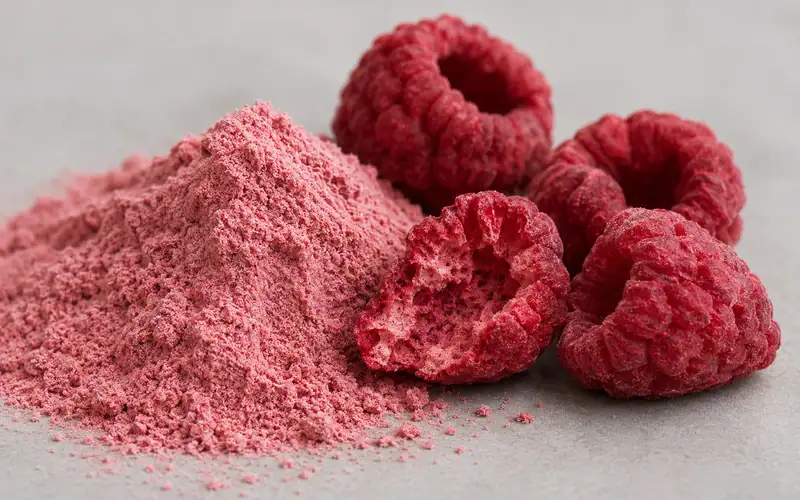
Freeze-dried fruit powder offers several routes to fruit flavor: mixed through a cake, blended into a drink, or applied to a snack. The most useful choice is the one that performs well through the product’s actual mixing, processing and storage steps.
Businesses exploring a branded freeze-dried food product can review FNH’s private label services and discuss suitable ingredient and packaging options with the team. Begin with the intended application so the available formats can be assessed against the recipe.