
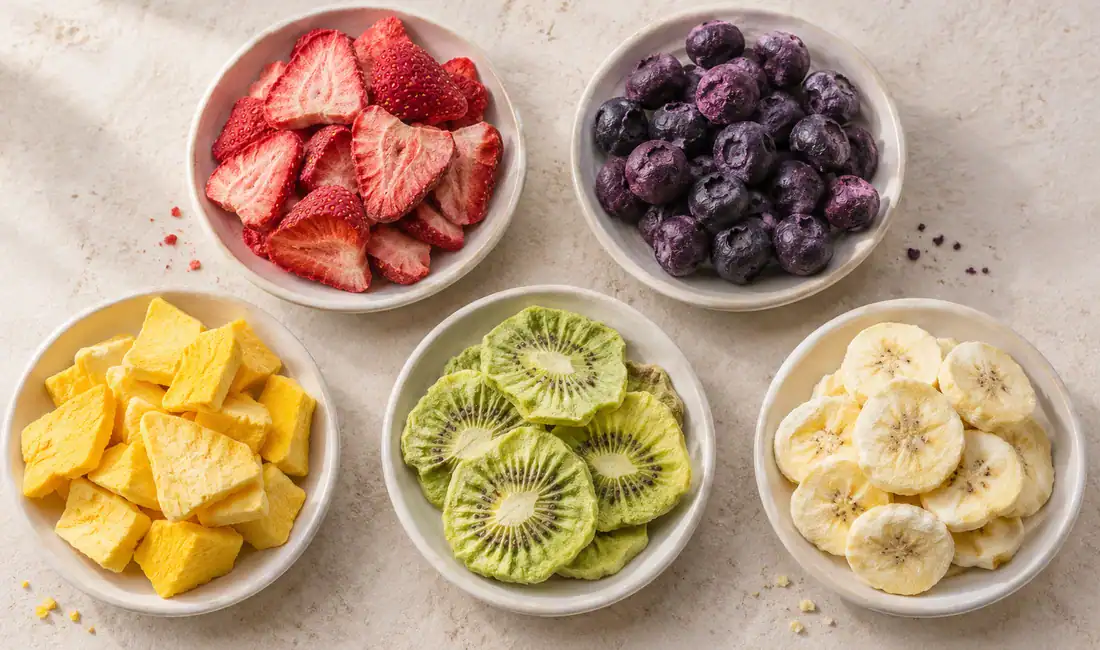
A bowl of yogurt can work well with fresh berries or a few crisp pieces of freeze-dried fruit. Fresh fruit adds juice and softness. Freeze-dried fruit is light, easy to store, and ready to use. Both can bring fruit into a meal, but their nutrition labels may look quite different.
Are freeze-dried fruits healthy? Plain versions can be a useful part of a balanced diet. The main points to consider are nutrient retention, natural sugar, and portion size. This guide explains what changes during freeze-drying, how the result compares with fresh fruit, and what shoppers and food brands should check.
Plain freeze-dried fruits can be healthy when eaten in suitable portions. They retain fruit fiber, minerals, and varying amounts of vitamins and plant compounds. Removing water makes fruit easier to store and carry, but it also changes how much fruit fits into a serving by weight.
The finished recipe matters. A bag of plain strawberry pieces has a different nutrition profile from strawberries coated in chocolate or mixed with added sugar. Freeze-drying describes the process; it does not define every ingredient in the final product.
For manufacturers and suppliers, a sound nutrition claim depends on the finished product. The fruit type, recipe, and nutrient data should support the claim. A general statement about freeze-drying cannot replace those checks.
Freeze-drying removes water from frozen fruit under vacuum. During the main drying stage, ice changes directly into vapor. This step is called sublimation. Further drying removes more of the remaining moisture.
The process uses controlled heat to support drying while managing the fruit’s temperature. It avoids the prolonged exposure to hot air used in some other drying methods. These conditions can help preserve color, flavor, and some heat-sensitive nutrients.
As water leaves, it creates small spaces within the fruit. This porous structure gives many freeze-dried pieces their light, crisp texture. It also makes them sensitive to moisture after opening. For fruit producers, careful drying and suitable packaging both affect the quality that reaches the customer.
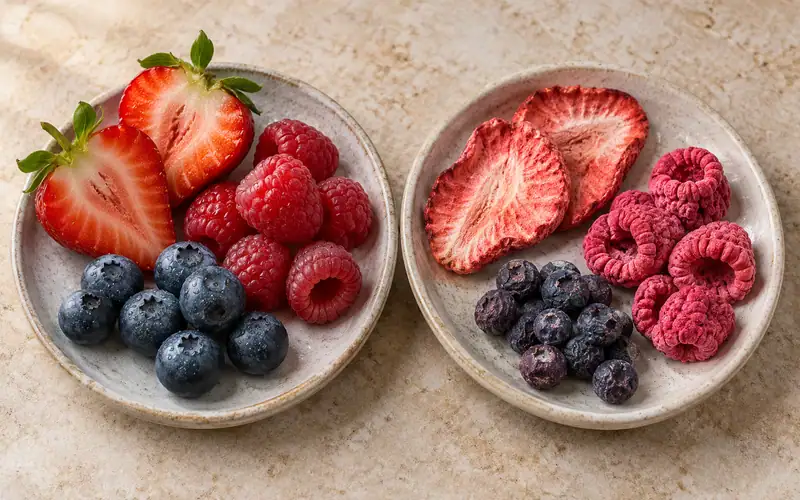
Freeze-dried fruit retains several useful nutrients, but each nutrient responds differently to processing. The fruit itself also matters. Strawberries, blueberries, and bananas start with different amounts of vitamins, minerals, and fiber. The main groups below need to be assessed separately.
Whole-fruit pieces generally retain their fiber and minerals after freeze-drying. Fiber remains in the fruit’s solid material, while minerals do not evaporate with the water.
However, preparation can change the result. Removing skins, filtering juice, or separating seeds can alter fiber content before drying begins. Plain whole-fruit pieces and a fruit juice powder should therefore be judged on their own nutrition data.
Minerals such as potassium, magnesium, and calcium may remain in the dried fruit. Their amounts depend on the fruit and the portion. Their presence alone does not mean every product is a rich source.
Freeze-drying can preserve vitamin C well compared with some heat-based drying methods, but it does not prevent every loss. Vitamin retention varies with the fruit, preparation, and drying conditions.
A study of blueberries, tart cherries, strawberries, and cranberries found that freeze-drying retained vitamin C better than the other drying methods tested. The results also varied by fruit and nutrient. They do not support a single retention percentage for all freeze-dried fruits. Other vitamins, including B vitamins, need separate checks.
Fresh fruit is not fixed in nutritional value either. Its nutrients can change after harvest and during storage. The age and storage history of both products matter when comparing them.
Freeze-dried fruit can retain plant compounds with antioxidant activity. Examples include anthocyanins, carotenoids, and phenolic acids. Their levels depend on the fruit and the process, and some can decline during drying or storage.
A higher amount per gram of dried fruit may simply reflect water removal. It does not necessarily mean the process created more of a compound. Retaining these compounds also does not prove that a snack prevents disease. Food brands should keep nutrition claims separate from medical claims.
Fresh and freeze-dried fruit can both provide useful nutrients. The clearest differences are water content and the amount of fruit solids in each gram. This comparison applies to the same fruit without added sugar or coatings.
| Feature | Fresh fruit | Plain freeze-dried fruit |
| Fiber and minerals | Present in the fruit’s solids | Generally retained; amounts per serving vary |
| Vitamins | Levels can change during storage | Some losses can occur during processing and storage |
| Natural sugar per gram | Lower because water adds weight | Higher because much of the water is removed |
| Calories per gram | Lower for the same fruit | Higher for the same fruit |
| Water content | Contributes water to the diet | Contains very little moisture |
The table shows why equal weights are not always useful for judging a snack. Actual portions need a closer look.
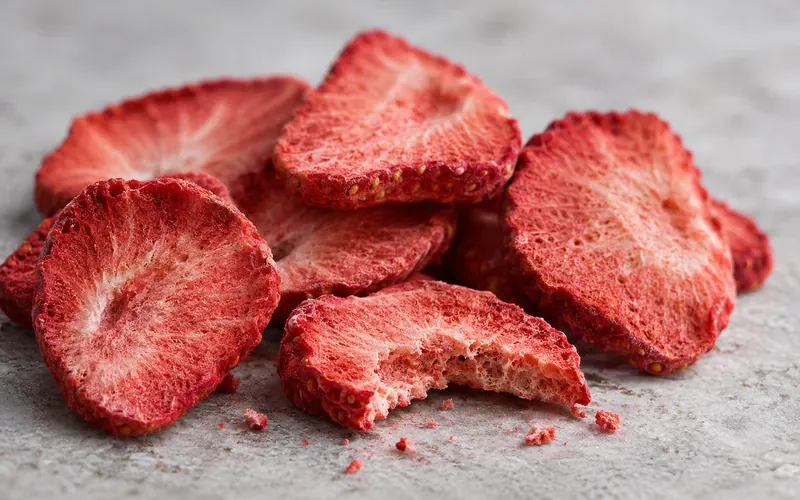
Removing water concentrates the fruit’s natural sugar and calories by weight. It does not add sugar by itself. A 100g portion of freeze-dried strawberries represents much more original fruit than 100g of fresh strawberries.
Three comparison methods answer different questions. Equal weights show concentration. Equal amounts of original fruit help explain changes caused by processing. The serving actually eaten shows how much sugar and energy enter a meal.
For everyday eating, the last measure is usually the most useful. A small portion of plain freeze-dried fruit can fit into a balanced snack. Eating several portions straight from a large bag can give a different result, even when no sugar has been added.
Fresh fruit provides much more water than freeze-dried fruit. For the same fruit, this lowers calories per gram and allows a larger portion by weight for a given calorie intake.
That can make fresh fruit useful when a person wants a moist, substantial snack. Freeze-dried fruit offers a dry, crisp option that is easy to carry. How filling either snack feels also depends on portion size and the other foods eaten with it.
A suitable choice starts with a clear ingredient list and a serving that fits the intended use. Nutrition labels and packaging instructions provide more useful detail than a broad claim such as “healthy fruit snack.” These checks help both shoppers and brands compare products.
For plain fruit, look for the named fruit in the ingredient list. Check any extra ingredients separately. Sugar, syrup, and sweet coatings change the finished product’s nutrition profile.
On a U.S. Nutrition Facts label, Total Sugars includes both natural fruit sugar and any added sugar. Added Sugars identifies the sugar added to the product. A label showing 0g Added Sugars can still show several grams of Total Sugars. The two figures should not be added together.
The freeze-dried fruit range provides examples of fruit options to consider. For bulk supply, buyers should check the chosen product’s ingredient list and nutrition data before planning a label or health claim.
Serving weight and servings per package show how the nutrition figures relate to the amount eaten. A light bag can still contain more than one serving.
For example, if a 30g bag lists a 10g serving, the full bag contains three servings. Eating the whole bag gives three times the calories and sugar shown per serving. This is a label-reading example, not a recommended portion for every fruit.
Portion needs vary with the fruit, the meal, and the person. The label provides a reference amount; it is not a personal diet plan.
Sealed packaging helps protect freeze-dried fruit from moisture. Oxygen exposure can also affect some sensitive compounds during storage. Keeping the product protected helps preserve its texture and quality.
Follow the stated storage directions and close the pack after use. A small bowl can help keep the portion clear while the rest stays sealed. There is no single shelf life that applies to every fruit, recipe, and package.
Freeze-dried fruit works well as a measured snack or a small addition to a meal. Yogurt, oatmeal, and cereal are simple examples. The amount used should suit the whole meal, including any sugar already present in other ingredients.
Freeze-dried blueberries can add fruit flavor to yogurt or breakfast bowls. Add them just before eating when a crisp texture is preferred; they will soften as they absorb moisture.
For food brands, the same principle applies to the finished recipe. Plain fruit can be a useful ingredient, but the complete snack still needs its own nutrition assessment.
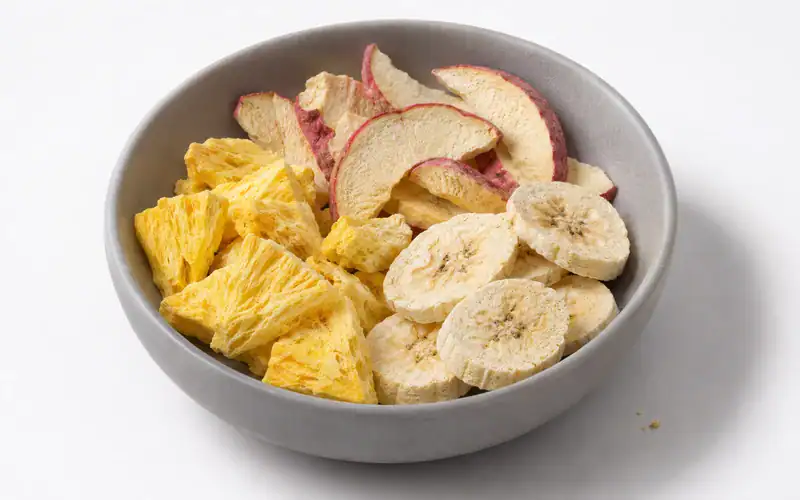
Questions about weight control, fruit intake, and rehydration often come up after the main nutrition comparison. The answers depend on how the product is used.
They can fit into a weight-management diet, but they do not cause weight loss by themselves. Portion size and total energy intake matter. Fresh fruit may suit someone who wants more food weight for fewer calories, while a measured portion of freeze-dried fruit can be convenient.
Plain freeze-dried fruit can contribute to daily fruit intake. However, a handful of dried pieces should not be assumed to equal a handful of fresh fruit. Check the serving information and any stated fresh-fruit equivalent. A fruit-flavored snack with only a little fruit is a different product.
Most plain fruit snacks sold ready to eat can be eaten dry. Rehydration is optional when a softer texture suits the recipe. Follow the product’s directions. Adding water changes moisture and texture, but it does not restore nutrients lost during processing.
Freeze-dried fruits can be a useful part of a balanced diet. They offer fruit nutrients in a light, crisp form, while fresh fruit provides more water and fewer calories per gram. Ingredient choices and portions matter more than a simple ranking of one format over the other.
For food brands, a suitable product should match the recipe, serving size, and packaging needs. FNH Food can be contacted to discuss available fruit options and product specifications. Those details provide a sound basis for choosing an ingredient and describing it accurately.