
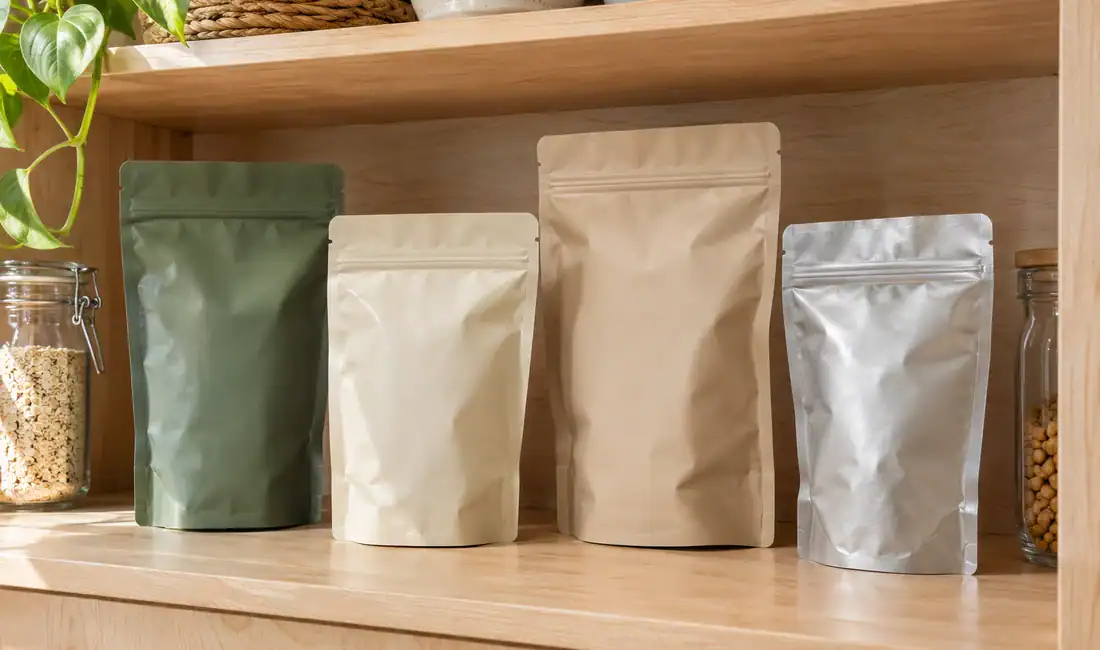
Freeze-dried food is famous for its long shelf life, but if you look around online, you’ll find wildly different numbers. Some say 10 years, others claim 30. Honestly, it mostly depends on the food type, the packaging, and how you store it.
Most freeze-dried foods, when packaged right, last between 10 and 25 years. Low-fat items like fruits, vegetables, and plain grains tend to last the longest. Meats, dairy, and mixed meals usually sit at the shorter end because of their fat content. Once you open a package, though, forget about decades—it’s best to use it within days or weeks.
The reason shelf life varies so much isn’t really about freeze-drying itself. It’s about what’s left behind—fat, sugar, and any moisture can all speed up spoilage. The next sections break down shelf life by food type, explain what actually causes freeze-dried food to go downhill, and touch on why published numbers are all over the place.
Shelf life comes down to how much water is left, how the food changes over time, and how well the packaging keeps out moisture and air. Several things work together, but some matter more than others.
Freeze-drying pulls out about 98 to 99 percent of the water. That tiny bit left is called residual moisture. But here’s the thing—residual moisture and water activity aren’t quite the same.
Moisture content tells you how much water is there in total. Water activity measures how much of that water is actually available for bacteria, molds, or chemical reactions.
Freeze-drying drops water activity below what micro-organisms need to grow. So, just having a low moisture percentage doesn’t guarantee a long shelf life. It’s really water activity that matters most.
Low water activity keeps bacteria and mold at bay, so microbes aren’t usually what ends the shelf life. But chemical changes keep going.
Fats react with oxygen (that’s lipid oxidation), color changes happen, and vitamins slowly break down with time and light. These things don’t need microbes.
In practice, shelf life ends when flavor, color, or nutrition drop off too much, not when the food becomes unsafe.
Here’s how the main factors stack up, from most to least important:
| Rank | Factor | Why it matters |
| 1 | Residual moisture and water activity | Sets the baseline stability of the dried product |
| 2 | Packaging barrier performance | Controls how much moisture and oxygen reach the food |
| 3 | Storage temperature | Higher temperatures speed up chemical reactions |
| 4 | Residual oxygen inside the pack | Drives oxidation of fats and pigments |
| 5 | Raw material fat content | Fat-rich foods oxidize sooner than lean ones |
All five need to be right for a long shelf life. If even one is off, shelf life can drop dramatically—sometimes by a factor of ten.
So, it makes sense to prioritize the top ones first. Getting the drying right and using a solid barrier package matter more than fussing over oxygen in a bag that already leaks moisture.
Shelf life varies by product. Low-fat, single-ingredient foods last the longest. Mixed recipes are limited by their weakest ingredient, and once you open any pack, it starts pulling in moisture from the air.
Freeze-dried fruits and veggies are low in fat, so they last the longest. The way they’re cut matters too—dices, slices, whole pieces, granules, and powders all dry differently. Powders have more surface area, so they’re extra sensitive to packaging quality. According to manufacturers, their freeze-dried products can stay fresh and nutritious for up to 20 years if stored right. It’s really the combo of thorough drying and low fat that lets these foods outlast meat, dairy, and eggs.
Mixed products combine several ingredients, each with its own stability. Freeze-dried soups, blends, and full meals are good examples. The least stable ingredient—usually something fatty or dairy—sets the overall shelf life, not the dried veggies or starches. That’s why shelf life numbers for mixed products are all over the place. If you want a specific shelf life, you really need to plan for it when designing the recipe.
Freeze-dried foods are porous, and they soak up moisture fast once opened. After opening, you’re looking at days or maybe a few weeks, not years. Humid air shortens that even more. If you leave a pack unsealed, it’ll lose crispness quickly. Splitting your stash into smaller packs helps, since you’re not exposing everything to air each time.
It’s easy to get confused when different sources list wildly different shelf lives for the same product. Usually, it’s because of missing details—two big reasons stand out: unclear test conditions and different definitions of what “shelf life” even means.
Most published shelf lives don’t explain the packaging used, the storage temperature, if oxygen was removed, or whether the item was a single ingredient or a mixed product. A 25-year shelf life in a sealed, oxygen-controlled can isn’t the same as something tossed in a regular plastic bag in a warm warehouse.
The actual number isn’t as useful as knowing the conditions behind it. A smaller figure with clear conditions is more trustworthy than a bigger one with no details. It pays to check the fine print.
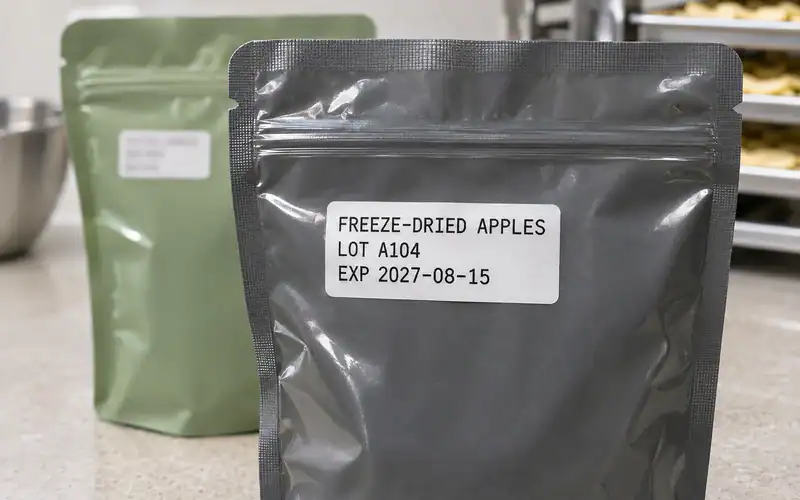
Shelf life can mean two things: how long the food stays safe to eat, or how long it keeps its best flavor, color, and texture. The “best quality” period is usually shorter and more conservative. That’s why the pack date is more about quality than safety.
Depending on which definition a source uses, you might see shelf life claims that are double or triple each other. Something labeled as safe for 30 years might only taste its best for a much shorter time.
Long shelf life is a big plus for freeze-dried food—great for storage, shipping, and steady supply. But there are limits, since shelf life depends on packaging and temperature, and both add cost.
Freeze-dried food stores at room temperature, so you don’t need a cold chain. It’s light and compact, making shipping cheaper per serving. You can get supply year-round, no matter the season, and there’s less spoilage. All this comes from very low moisture and low water activity, making it handy for pre-made meals, snacks, and as ingredients.
Shelf life only holds if the packaging stays intact. High-barrier film and good seals are a must. Warmer storage cuts shelf life fast, so cooler warehouses are best. Foods high in fat or sugar don’t last as long, so they’re often left out of recipes meant for long-term storage. Usually, flavor and color fade before the food becomes unsafe, so “best quality” dates are set with that in mind.
High-barrier packaging that blocks oxygen and moisture costs more than regular plastic bags. Temperature-controlled storage and shipping add even more. Still, lower spoilage and less waste can balance out those extra costs over time.
Freeze-drying, dehydration, canning, and freezing all slow spoilage, but they do it differently and last for different periods. Storage needs, packaging, and texture also set them apart.
Freeze-drying starts by freezing the food, then removes ice as vapor under low pressure. The result? A porous, super-dry product.
Dehydration uses warm air to evaporate water. It’s cheaper and simpler but shrinks the food and leaves more water behind.
Canning heats sealed food to kill micro-organisms. The food stays wet, so texture and some vitamins take a hit.
Freezing keeps water in the food as ice, stopping microbes but requiring a constant cold chain from start to finish.
Here’s how they stack up for storage, conditions, and weight:
| Method | Typical storage period | Storage conditions | Weight and volume |
| Freeze-dried | Longest of the four, in high-barrier packaging with oxygen control | Ambient | Greatly reduced |
| Dehydrated | Shorter than freeze-dried under the same packaging | Ambient | Reduced |
| Canned | Long, but limited by can seal and contents | Ambient | Full weight retained |
| Frozen | Months, not years | Frozen cold chain | Full weight retained |
Freeze-dried foods last the longest because their water activity—the free water microbes need—is extremely low. Dehydrated foods keep more water, so their shelf life is shorter.
Canned and frozen foods keep all their water, which means more weight to ship, and frozen foods demand a cold chain all the way to the end user.
The best preservation format really depends on how you plan to use the food—not just on how long it’ll last.
Freeze-drying works well for low-fat fruits, veggies, and ingredients where you want room temperature storage and a long shelf life. Because freeze-dried foods are so porous, they rehydrate fast—pretty handy if you’re in a hurry.
Dehydration is fine for foods where a chewy texture isn’t a dealbreaker and you’re watching costs.
Canning is great for wet, ready-to-eat items. Freezing is your friend if you want to keep that just-picked texture and already have cold storage available.
High-fat or high-sugar foods don’t freeze-dry well. For those, you’ll need a different method.
Storage conditions make or break shelf life. If you don’t control them, even a sealed pack can go bad years before it should. Temperature, humidity, oxygen, and light all attack at once, and you’ll notice real changes if you lose control of any one of them.
Cool, dry storage stretches out shelf life. Warm, damp storage cuts it short. Most in the industry shoot for a stable temp around 20 °C or lower—any extra heat just speeds up browning and oxidation in the package.
| Condition | Target range | Effect when exceeded |
| Storage temperature | Around 10–20 °C, stable | Faster flavour and colour loss |
| Ambient humidity | Below about 60% RH | Moisture pressure on seals and opened packs |
| Light exposure | Dark storage | Slow vitamin and pigment loss |
Temperature swings can be just as bad as high heat. When temps go up and down, air gets pulled through weak seals.
Most storage problems start with the packaging, not the food itself. A tiny hole, a weak heat seal, or a punctured mylar layer lets in moisture and oxygen, and the food inside soaks it up fast.
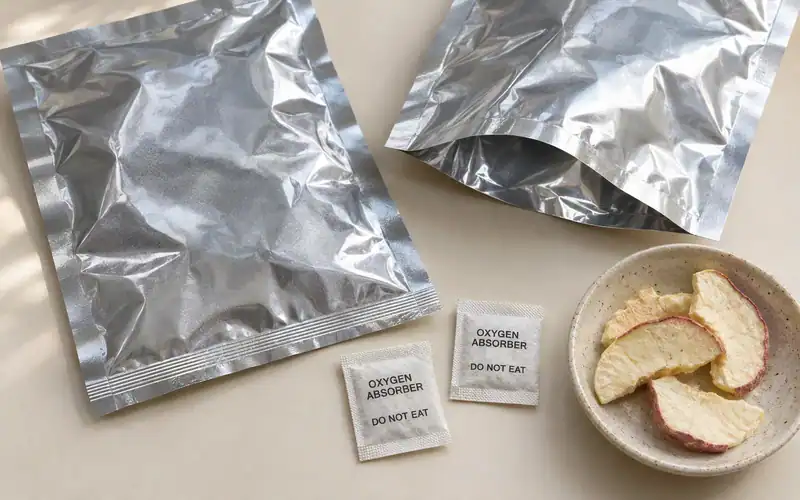
Old or missing oxygen absorbers leave oxygen in the pack, which speeds up fat oxidation if there’s any fat in the food.
Other common mistakes:
Using airtight containers as a backup helps, but they can’t fix a pouch that’s already compromised.
Usually, you’ll spot signs of failure before the food gets unsafe. If you see clumping, soft or leathery pieces, or a pack that’s gone floppy, it’s probably picked up moisture.
Keep an eye out for:
If you see mold or smell rancid odors, don’t taste it—just toss it. And if you find a bad pack, check the rest stored nearby, just in case.
Shelf life numbers only mean something if you know the conditions behind them. If you’re buying, check three things: storage assumptions, the packaging specs, and the testing or process records that back up the claim.
When a supplier claims 20 or 25 years, that’s based on a certain storage setup—not just any old warehouse. Always ask for the assumed temperature, humidity, and light exposure for the claimed shelf life.
Consistent, cool storage matters more than just hitting a low temp once. Keeping things around 15 to 20 °C is much better than bouncing between hot days and cool nights.
Brands like Mountain House, Augason Farms, and Peak Refuel put their shelf life claims right next to storage advice. The same goes for wholesale supply. If a supplier won’t name the storage conditions, you really can’t compare their shelf life to anyone else’s.
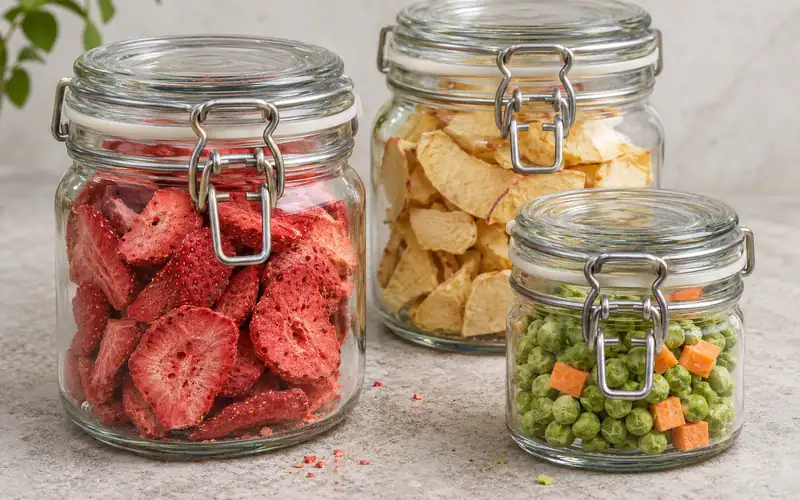
The claimed shelf life needs to match the actual packaging you’re getting. A #10 can with a sealed lid and a mylar pouch with an oxygen absorber will protect food much better than a plain vacuum bag or a glass jar with a plastic lid.
Ask for the packaging specs in writing. Key details to request:
| Item to request | Why it matters |
| Film structure and thickness of the mylar bag | Controls oxygen and moisture barrier |
| Oxygen transmission rate (OTR) | Lower numbers slow oxidation of fats and pigments |
| Moisture vapour transmission rate (MVTR) | Shows how fast food will soak up water |
| Oxygen absorber size and residual oxygen level | Confirms the pack is nearly airtight |
| Seal width and seal strength test result | A weak seal can ruin even the best film |
If the claim is for #10 cans, don’t assume it applies to buckets, vacuum bags, or retail pouches. The spec should spell out the exact format you’ll get.
Documentation shows if the shelf life claim is based on real data or just marketing fluff. Suppliers can provide product specs, water activity and moisture results, micro tests, and a written shelf life statement.
Water activity tells you how much free water is left for microbes. Residual moisture is what’s left after drying. Both should be on the certificate of analysis, along with the test method used.
Ask how they estimated the shelf life. Real-time storage trials, accelerated testing at higher temps, or regular checks for flavor, color, and texture all give different confidence levels. The method should be listed with the result.
Once you open it, freeze-dried food is best used within a few weeks. The porous texture means it sucks up moisture fast. Resealable bags or airtight jars help, but close them right away every time.
Home batches can last years if they’re fully dry and sealed in barrier packaging with oxygen absorbers. The big risk is not drying thoroughly—any dampness inside shortens shelf life.
Freeze-dried meat usually doesn’t last as long as fruits or veggies. Fats keep oxidizing even after drying. Using lean cuts, keeping oxygen low, and storing cool will give you the best results.
Opened freeze-dried fruit softens up fast in humid air, since sugars grab moisture. Breaking it into smaller resealable bags helps keep the main stash fresher longer.
Without oxygen control, you’re looking at months to a few years, not decades. Oxygen causes fat oxidation and color loss. Good barrier packaging helps, but it can’t remove oxygen already inside.
Freeze-dried food usually loses quality—flavor, color, vitamins—before it’s unsafe. Heat, light, air, or moisture all speed up that decline and cut the shelf life.
Freeze-dried food can last for years, but honestly, it all comes down to the conditions. You need low residual moisture and low water activity as your foundation. Then, things like barrier packaging, cool storage, and keeping out oxygen help protect that foundation over time.
Shelf life shifts depending on what you’re storing:
If you’re trying to make sense of shelf life numbers, two habits help a lot. First, always check the assumptions: What kind of packaging? What temperature? How’s the oxygen managed? Without that, numbers don’t mean much. Second, see if the number is about safety or just best quality—they’re not the same, and the difference can be huge.
Once you open a pack, everything changes. The porous structure just soaks up moisture from the air, so you’ve got days or maybe weeks, not years. Resealing and splitting portions helps, but if it’s humid, you’ll lose shelf life fast.
For B2B planning, the steps are pretty straightforward:
| Priority | Action |
| 1 | Keep residual moisture and water activity low |
| 2 | Use high-barrier packaging |
| 3 | Store at cool temperatures |
| 4 | Minimize oxygen inside the pack |
| 5 | Check fat content in raw materials early on |
The top priorities matter most. Shelf life targets only work when you nail all these factors at the same time. Miss one, and the whole thing can fall apart.