
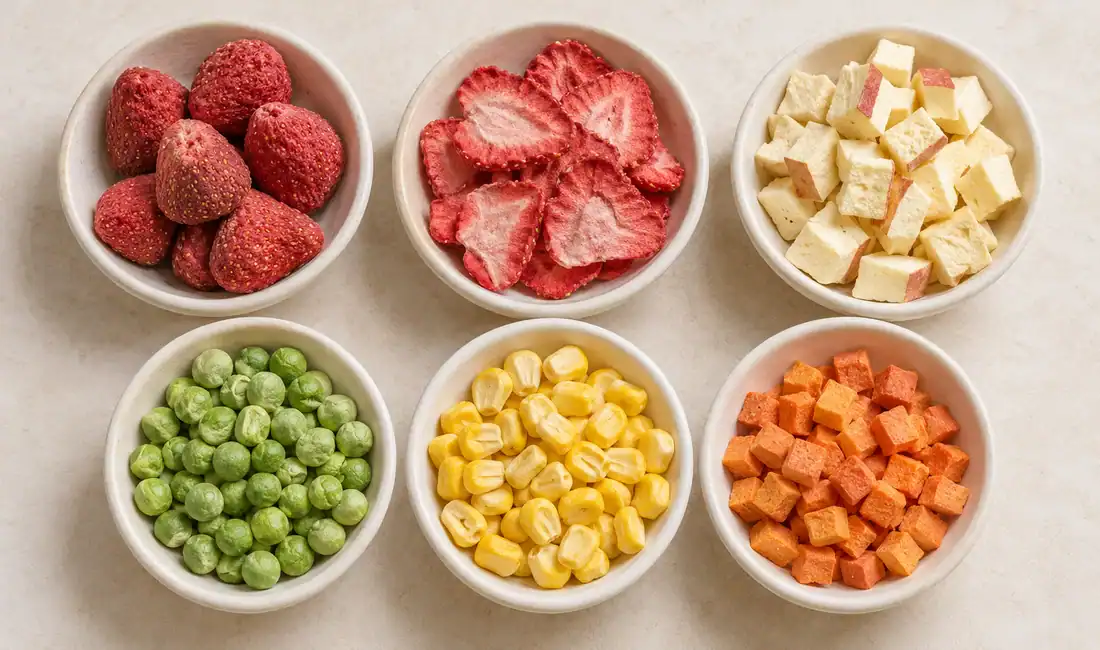
Freeze-dried food is now common in snack aisles, drink mixes, bakery products, soups, and ready meals. Its low weight and crisp texture make it easy to recognize. Yet the name can cause confusion. Freeze-dried food is not simply frozen food, and it is not made by ordinary hot-air drying.
The process starts with frozen food. A vacuum then helps turn the ice inside the food into vapor. This removes most of the water while the product stays at a low temperature. The result is a dry, light food that can keep much of its original shape and can often take up water again with ease.
For food brands and buyers, the value of freeze-drying goes beyond shelf life. Product form, final moisture, water activity, packaging, and storage all affect the finished result. This guide explains each part in simple terms.
Freeze-dried food is food that has been frozen and dried under low pressure. The method is also called lyophilization. During the main drying stage, ice leaves the food as vapor without first becoming liquid water. This change is called sublimation.
The process is different from placing food in a freezer. Frozen food still holds almost all of its water and normally needs a cold chain. Freeze-dried food has had most of that water removed. When the product reaches its target condition and receives suitable packaging, it may be stored without freezing. The label and the manufacturer’s storage directions still control how each product should be handled.
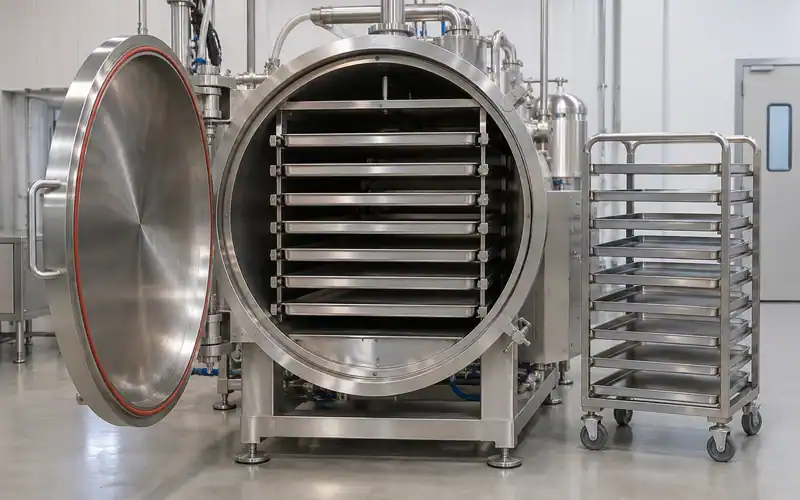
Freeze-drying works by freezing the water in food and then removing that ice in a vacuum. Commercial production uses controlled time, temperature, and pressure. The exact settings depend on the recipe, piece size, sugar level, fat level, and final product goal.
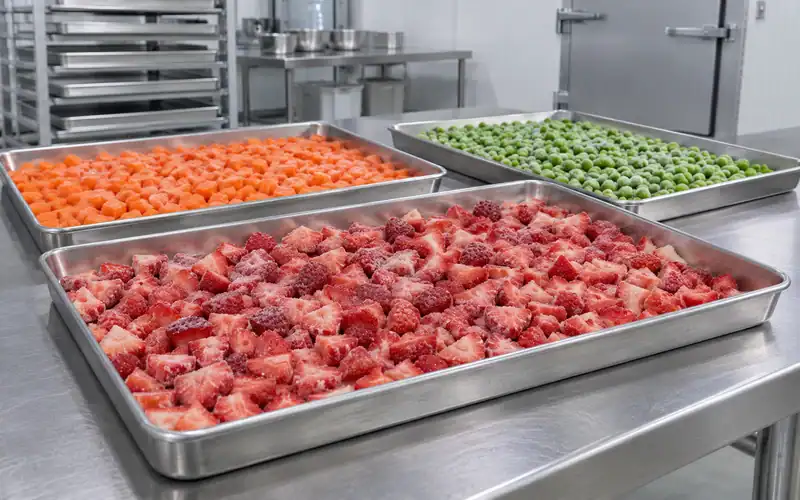
The first step prepares clean, suitable raw materials for even processing. A manufacturer may sort, wash, peel, trim, or cut fruits and vegetables. Meals may require weighing, mixing, cooking, cooling, and portioning. Some vegetables may be blanched. Other foods need different controls. The preparation method must match the food and its intended use.
The prepared food is frozen until the water inside it forms ice. Complete and controlled freezing is important. Ice crystal size can affect the small open spaces left in the food after drying. Those spaces influence texture and rehydration. The best freezing profile is therefore set for the product rather than copied from a different food.
The frozen food enters a chamber where pressure is lowered. The equipment adds carefully controlled heat. Under these conditions, the ice can change directly into water vapor. A cold surface inside the system collects that vapor as ice. This stage removes most of the frozen water and is often called primary drying or sublimation drying.
After the visible ice is gone, a small amount of water can still be attached to the food’s solids. A secondary drying stage removes more of this bound moisture. This stage is also called desorption drying. The process ends only after the product reaches its approved final target. Manufacturers may check moisture, water activity, weight, texture, or other product specifications.
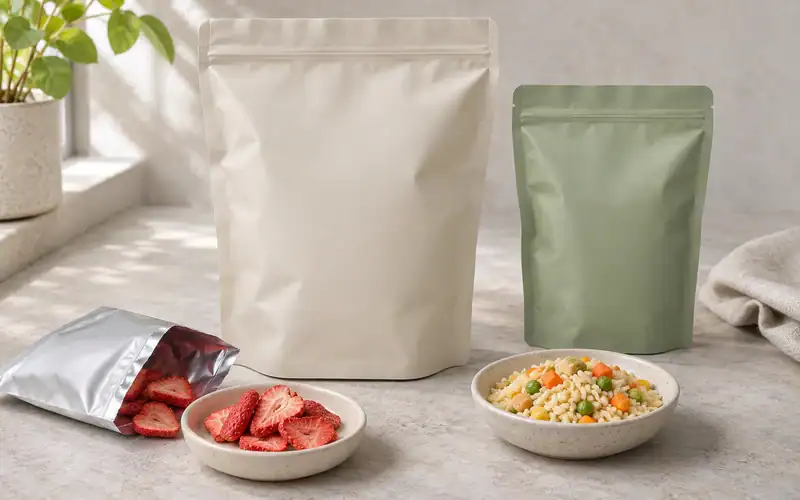
Finished freeze-dried food can absorb moisture from the air very quickly. Packaging should therefore follow without an unnecessary delay. The chosen pack must fit the product and its planned shelf life. Moisture barrier, oxygen barrier, seal quality, light protection, headspace, and pack size can all matter. Packaging does not correct an incomplete drying process, but it protects a properly finished product from the outside environment.
Removing available water slows many causes of food spoilage. Bacteria, yeasts, and molds need available water to grow. Enzymes and chemical reactions can also change flavor, color, and texture over time. A dry product gives these processes less water to use.
Total moisture and water activity are related, but they are not the same measure. Moisture content shows how much water is present. Water activity shows how available that water is for microbial growth and chemical change. Commercial shelf-life decisions should use product testing and a suitable packaging study, not appearance alone.
Low water activity can stop microbial growth while the pack stays dry and sealed. It does not prove that all microbes were killed. If a contaminated product takes up water again, surviving microbes may become active. This is why raw material control, hygiene, validated processing, testing, and package integrity remain important.
Freeze-dried food is light because most of its water is gone. Many fruits and some vegetables become crisp enough to eat as snacks. The exact bite depends on the food’s natural structure, sugar, starch, fat, cut size, and final drying target.
Low-temperature water removal can help a food keep more of its original shape and color than some high-heat drying methods. However, the result is not identical to fresh food. Raw material quality, browning, pretreatment, freezing, drying, oxygen, and light can all change the final look.
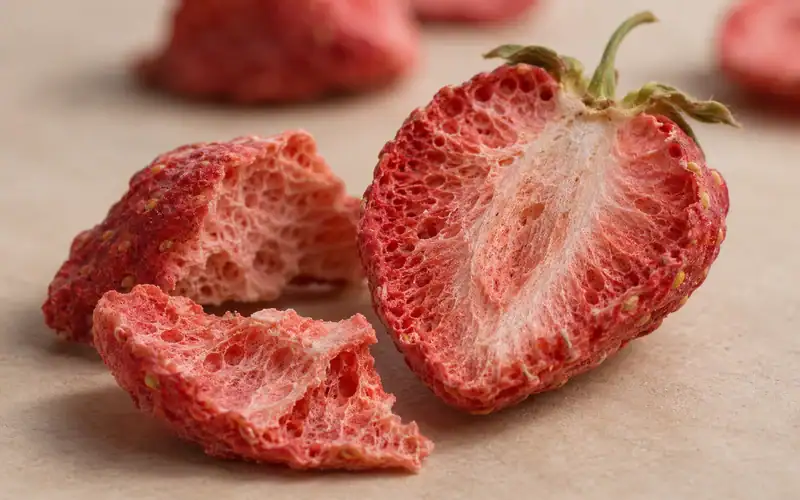
Sublimation leaves small pores where ice once sat. Water can move into these open spaces during rehydration. Powders and small pieces often take up water faster than large pieces. Some products return close to a soft, fresh-like texture, while others are best used in soups, sauces, or blended formulas.
Removing water can make flavor seem stronger when the food is eaten dry. Sweetness, acidity, aroma, and seasoning may feel more concentrated in a crisp piece. Once water is added, the flavor balance changes again. Product developers should test the food in the form in which the customer will use it.
Freeze-dried, frozen, and dehydrated foods use different ways to manage water and quality. The best choice depends on the product, sales channel, budget, storage plan, and expected eating experience.
| Feature | Freeze-Dried Food | Frozen Food | Dehydrated Food |
| Main method | Freezing, vacuum, and sublimation | Cold storage keeps water frozen | Heat and moving air often evaporate water |
| Water in product | Most water is removed | Most water remains | A large share of water is removed |
| Storage | Often shelf-stable in a suitable sealed pack | Needs continuous frozen storage | Often shelf-stable in a suitable sealed pack |
| Typical texture | Light, porous, and often crisp | Firm while frozen; softer after thawing | Chewy, leathery, crisp, or firm |
| Rehydration | Often fast because of open pores | Not required; product is thawed | Often slower and may be less complete |
| Production cost | Usually higher due to equipment and cycle time | Cold-chain cost continues through storage and shipping | Usually lower than freeze-drying |
Many fruits, vegetables, cooked meals, and food ingredients can be freeze-dried. A food’s composition affects how well it dries. Foods that contain much fat or sugar can be more difficult to process and may need special product development.
Common choices include strawberries, bananas, apples, blueberries, peaches, pineapple, and dragon fruit. They may be supplied whole, sliced, diced, broken into pieces, or milled into powder. For example, FNH offers freeze-dried strawberries in whole, sliced, and diced forms for bulk supply. A buyer should confirm the required cut, particle range, ingredient statement, packaging, and quality standard before ordering.
Vegetable options include peas, carrots, pumpkin, corn, potatoes, shallots, and leafy vegetables. These products can support soup mixes, instant meals, seasoning blends, bakery fillings, snacks, and dry meal kits. Freeze-dried corn is one example of a bulk ingredient that can be used as kernels or added to a larger formula.
Soups, porridges, cooked dishes, and other prepared foods can also be freeze-dried when the recipe and process are suitable. Ingredients may be sold as pieces, granules, or powders for snacks, drinks, supplements, bakery products, and ready meals. Recipe development should account for salt, sugar, fat, serving size, rehydration time, and target texture.
Freeze-dried food can be eaten dry, added to a formula, or rehydrated. The correct method depends on the product label and the way the manufacturer designed the item.
Ready-to-eat fruits and some vegetables may be eaten straight from the pack. A dry, crisp texture works well for snack products and toppings. Buyers should not assume that every freeze-dried ingredient is ready to eat. The specification and label should state whether cooking or other preparation is required.
Dry pieces can be used in cereal, granola, chocolate, bakery mixes, soup kits, and snack blends. Powders can add color and flavor to drinks, yogurt mixes, fillings, and dry formulas. Product developers should test how the ingredient behaves during mixing, baking, storage, and contact with wet ingredients.
Some meals and ingredients are designed to take up hot or cold water. The amount of water and waiting time vary by food, piece size, and desired texture. The product directions should provide the correct ratio. After rehydration, foods that need temperature control should be handled like comparable fresh or cooked foods.
Freeze-dried food can be safe when suitable raw materials, hygienic production, validated controls, testing, packaging, and storage are used. Freeze-drying itself is mainly a water-removal process. It should not be treated as a universal kill step for bacteria, viruses, yeasts, or molds.
This point is most important for raw meat, seafood, eggs, dairy foods, and mixed meals. A food that needed safe cooking before drying may still need safe cooking after rehydration unless a validated process made it ready to eat. The label should give clear preparation and storage directions.
A damaged seal, a swollen pack, visible moisture, mold, or an off odor can signal a problem. The product should not be used when the package or food does not match its normal condition. Manufacturers and brand owners should also define allergen controls, traceability, lot coding, and complaint procedures for each product.
Freeze-dried food should normally be kept sealed in a cool, dry place away from direct light and heat. The package should protect the product from moisture and, when needed, oxygen. The exact storage condition must follow the label.
After opening, the food should be closed again as soon as possible. A small pack may be better than a large pack when the product will be used slowly. This reduces repeated exposure to humid air. Clean, dry tools also help prevent moisture and contamination from entering the pack.
There is no single shelf life for all freeze-dried foods. A valid date depends on the food, process, final water activity, oxygen level, packaging material, seal, storage temperature, and quality target. Shelf-life claims should come from product-specific evidence and should be printed with clear lot and storage information.
No. Frozen food keeps most of its water and normally stays in a freezer. Freeze-dried food has had most of its water removed under low pressure.
Many unopened products do not need refrigeration when they are fully dried, correctly sealed, and labeled for room-temperature storage. The product label should always be followed. A rehydrated or opened food may have different storage needs.
Some products can be eaten dry, such as ready-to-eat fruit snacks. Other products are ingredients or meals that need water or cooking. The label gives the correct method.
Freeze-drying can retain many nutrients because it removes water at a low product temperature. However, no preservation method keeps every nutrient unchanged. Results vary by food, pretreatment, process, oxygen exposure, packaging, and storage time.
No. Freeze-drying is not a reliable way to kill all harmful microbes. Safe sourcing, hygiene, cooking when required, process control, testing, and dry sealed storage are still needed.
Freeze-drying needs specialized vacuum equipment, low temperatures, energy, and long controlled cycles. The higher cost may be useful when low weight, porous texture, shape, color, flavor, or fast rehydration is important.
Freeze-drying has three basic ideas: freeze the food, remove the ice as vapor under low pressure, and protect the dry product in a suitable sealed pack. This method creates light, porous food that is often crisp and easy to rehydrate.
The process is useful, but the result depends on careful product design. Raw material quality, recipe, cut size, freezing, drying targets, food safety controls, and packaging must work together. Buyers should compare specifications and samples instead of judging a product by appearance alone.
FNH supports food brands, distributors, and ingredient buyers with freeze-dried fruits, vegetables, and prepared foods in a range of forms. Businesses can contact FNH to discuss samples, bulk specifications, custom recipes, and packaging needs for a planned product.